How to Dress After Weight Loss.
Jul 29, 2026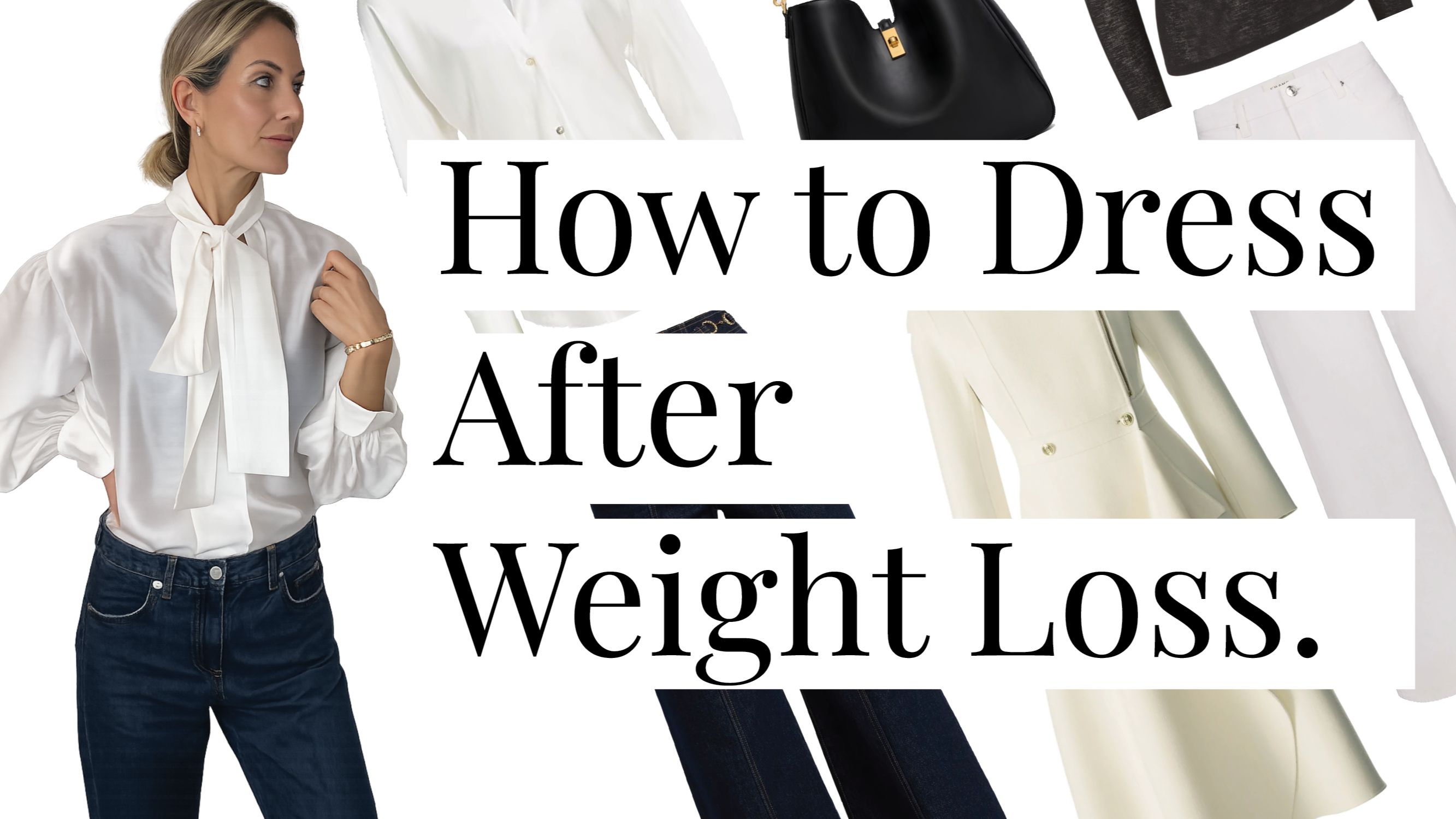
Chapter 1
I Lost 100 Pounds. Why Do I Still Feel Like the Old Me?
I have had so many clients that have lost weight…100+ pounds and said they still feel like the fat kid. Losing a significant amount of weight is often seen as the finish line. You worked so hard to get here…but now that you’re here, you brain is still telling you the same stories. We imagine the transformation ending the moment we zip up a smaller dress size or step on the scale and see the number we've been chasing for years.
But for many of my clients, they tell me that moment isn't the end at all. It's the beginning of a completely different journey.
Over the years, I've worked with countless women and men who have transformed their bodies. Some have lost 30 pounds. Others have lost over 100. Some through lifestyle changes, some through gastric bypass surgery, and increasingly, many through GLP-1 medications.
Almost every one of them has said some version of the same thing:
"I don't know how to dress anymore."
You might think that sounds like a shopping problem. But I’m telling you, it isn't just that. It's an identity problem. Because while your body may have changed over the course of months, or years, your mind has been living with one version of you for far longer, sometimes decades. The wardrobe that once felt like protection no longer fits and no longer feels right.
The person looking back in the mirror feels unfamiliar. Compliments can feel uncomfortable. Shopping is still strangely emotional. It was probably emotional before you lost weight and now that you’ve lost the weight, it carries different emotions. And despite everything you've accomplished, you may still reach for clothes that hide you.
If any of that sounds familiar, I want you to know something before we go any further. You are not doing anything wrong. What you're experiencing is incredibly common. It just isn't talked about enough.
The Weight Isn't the Only Thing You Lost
When we talk about weight loss, we usually focus on numbers.
How many pounds? What size are you now? How much did your cholesterol improve? How long are you able to work out now? How much did your heart rate decrease? Those milestones matter, but they don't tell the whole story. Because major weight loss changes more than your body.
It changes how the world sees you. One of my clients in finance who has lost over 100 pounds told me it opened up a whole new world of opportunity, not just in clothes, but socially, and in work. It changes how people speak to you. It changes what stores you shop in. It changes how clothes fit. It changes what opportunities you say yes to. Sometimes it even changes your relationships. That's a lot of change to process.
Many of my clients tell me they half expected to feel instantly confident after losing weight. They imagined opening the closet one morning, putting on beautiful clothes, and suddenly feeling like the person they'd always wanted to become. But I’ve seen this isn’t the reality. Instead, they stand in front of a wardrobe that no longer represents who they are and think, "Now what?"
The Body Changed Faster Than the Mind
One of the biggest surprises after significant weight loss is realizing that your thoughts often haven't caught up with your body. You may still instinctively walk sideways through narrow spaces. You may automatically reach for the largest size on the rack. You may avoid fitted clothing because it still feels "too revealing." You may apologize for taking up space, even when you no longer do. Often these clients shop for clothing that is too big for them without even realizing it, despite now wearing a smaller size. When I gently suggest a smaller size, they'll often laugh and say, "There's no way that's going to fit." I recently did a closet cleanse with a doctor who lost over 60 pounds and she had a hard time telling if the clothes in her closet were too big for her. We gently tried on everything and I often told her the same thing as we went piece by piece through her closet…”that is too big for you, let’s give that to charity.
The Invisible Armor
For many people, clothing became a form of protection long before it became a form of self-expression. Oversized sweaters. Long cardigans. Loose black tops. Layers. Baggy jackets.
Just yesterday in Chicago, I did a Closet Edit & Audit with a woman who is very successful in tech. She felt self-conscious about her midsection, so she'd been buying long, shapeless sweaters in an effort to hide it. I gently had her stand in front of the mirror and showed her how a cropped, structured jacket was actually far more flattering. It defined her waist, balanced her proportions, and allowed us to see her shape. The oversized sweaters she had been relying on didn't hide her body, they added visual bulk and made her appear larger than she was.
It's something I see all the time. We instinctively reach for clothing that feels like armor, believing it will make us less visible. But often, the very pieces we choose to hide in do the opposite of what we intend.
The goal isn't to hide your body.
The goal is to dress it in a way that honors its unique proportions and allows your confidence, not your insecurities, to take center stage.
I completely understand the thinking behind wanting to conceal or hide behind your clothes. It is an attempt to create some emotional safety. But when that need for protection begins to fade, many people don't know what replaces it. Taking off the armor can feel totally vulnerable.
You may have spent years trying not to be noticed. Now people are looking. Friends comment. Coworkers compliment you. Family members react. Strangers smile. Even positive attention can feel overwhelming when you've spent years trying to disappear. That's one of the reasons buying clothes after weight loss can feel so emotional. You're not simply choosing a blouse. You're deciding how visible you're willing to become.
When Black Became a Hiding Place
For many people, wearing black wasn't a fashion choice. It was a coping strategy. Black became the safest option. It felt slimming. It drew less attention. It made shopping easier because everything matched.
I relate to this. For years I wore all black. I told myself it was chic. Sophisticated, timeless. But I don’t think I was always choosing black. I was resorting to it. I thought it made me look slimmer. And color felt risky. A bit childish. So black became my shortcut. But what I realized is that sometimes black is a power move, it’s protection.
And protection and alignment with your true self aren’t the same thing.
I can't tell you how many closets I've opened to find rail after rail of black clothing. Beautiful pieces, perhaps, but all quietly saying the same thing:
"Please don't notice me." There's nothing wrong with black. In fact, it remains one of the most sophisticated colors in fashion, and I wear it often myself. But the intention behind wearing it matters.
Are you choosing black because it reflects your style? Or because you're hoping to disappear? Those are two very different decisions.
After significant weight loss, one of the biggest challenges isn't simply buying smaller clothes. It's learning how to stop hiding. Suddenly, color feels intimidating. A cream sweater feels too noticeable. A soft blue blouse feels "too bright." A beautiful printed dress feels like something someone else would wear. Not because these clothes don't suit you. Because being seen feels unfamiliar.
One of my favorite moments with clients is introducing color back into their wardrobe, not because everyone should wear bright colors, but because they begin giving themselves permission to be visible again. To have fun with clothes.
Sometimes that starts with a soft ivory knit instead of black. A camel coat instead of charcoal. A beautiful emerald blouse that lights up their eyes.
Learning to wear color again isn't really about color. It's about stepping out from behind the version of yourself that believed staying unnoticed was the safest way to move through the world. And that, more than any trend or designer label, is where real transformation begins.
The Closet No Longer Matches the Person Standing Inside It
One of the first things I do with clients is a Closet Edit & Audit. It's never just about deciding what to keep. It's about discovering who they are now.
Closets tell stories. Sometimes they tell the story of a demanding career that no longer exists. Sometimes they tell the story of motherhood. Sometimes they tell the story of illness. Sometimes they tell the story of someone who spent years hiding. After major weight loss, your closet often becomes a museum of a previous version of yourself.
Every hanger quietly says, "This is who you used to be."
But if you're building a new life, you deserve a wardrobe that supports that life, not one that keeps reminding you of the person you've already outgrown.
I just did another Closet Edit & Audit for a beautiful Indian woman. She had told me that when she was young she loved wearing color. When we were in her closet I pointed out that everything in there was predominantly black and grey. We talked about when you come from a country that is so culturally different you do all you can to fit into your new home, your new country. It’s human to want to fit in, but often times you lose yourself, and what makes you truly unique and special when you try to fit in wearing a sea of Black House White Market. She showed me her photo album from when she was young and it was so stunning. The reds, and pinks and blues and greens she would wear. We are now focusing on bringing back the joy from her youth and incorporating her Indian culture into our new wardrobe. When you dress to disappear or fit in, you lose your magic. It is my greatest joy helping my clients transform their visual identity.
Style Is Not the Reward for Losing Weight
This is something I tell clients often. You don't have to "earn" beautiful clothes. You don't have to wait until you lose another ten pounds. Or twenty. Or until you've reached your goal weight. You deserve to feel good in your clothes today. Style isn't the prize at the end of the journey. It's one of the tools that helps you become the person you're working so hard to become.
The right wardrobe doesn't just reflect confidence. It helps create it. When your clothes fit your body well, align with your personality, and support the life you're building, something remarkable happens. You stop thinking about your clothes. You stop adjusting them. You stop hiding behind them.
Instead, they quietly support you while your attention shifts back to your work, your relationships, your family, your ambitions, and your life.
That's what great style should do.
This Isn't About Fashion
If you're looking for a list of flattering jeans or the "ten must-have pieces after weight loss," you'll certainly find plenty of articles like that.
This isn't one of them. Those things matter, and we'll cover practical strategies later in this guide. But first, we need to talk about something much more important.
Who are you now? Not what size are you.Not what brands you should wear. Not whether you should buy straight-leg or wide-leg trousers. Who are you becoming? Because the most successful wardrobe transformations don't begin with clothing. They begin with identity.
The clothes simply become the visual expression of that new identity.
A New Chapter
Over the next few chapters, I'm going to guide you through rebuilding more than your wardrobe.
We'll talk about why your old clothes no longer work, how your body proportions may have changed, why shopping feels so overwhelming, and how to create a style that feels authentic rather than intimidating.
We'll explore confidence, body image, visibility, and the psychology of getting dressed.
Most importantly, we'll build a wardrobe that supports the person you've worked so hard to become.
Because this next chapter of your life deserves more than clothes that simply fit. It deserves clothes that help you feel seen. Not for the size you've become. But for the person you've always been.
Chapter 2
The Identity Gap: When Your Body Changes Faster Than Your Mind
"I know I've lost the weight. I just don't feel like the person everyone else seems to see." It's one of the most common things I hear from clients after significant weight loss. Friends tell them they look incredible. Coworkers compliment them. Family members can hardly believe the transformation. Yet when they catch a glimpse of themselves in a shop window or walk into a clothing store, they still instinctively think, "I'm the biggest person in the room." If you've ever felt this way, you're experiencing what I call the Identity Gap. It's the space between who you were and who you're becoming. And it's one of the most overlooked parts of any major transformation.
We Don't Change Overnight
Our bodies can change dramatically in a year. Sometimes in just a few months.Our identity doesn't. Identity is built over years of experiences, conversations, successes, disappointments, and the stories we tell ourselves. Maybe for years you were the friend who always stood at the back of the group photo. The person who avoided sleeveless dresses. The one who dreaded weddings because finding something to wear felt impossible. Maybe you learned to joke about your weight before anyone else could mention it. Or you became known as "the funny one," "the smart one," or "the reliable one" because those identities felt safer than being seen for your appearance. Those stories don't disappear the day you lose weight. Your mind is still operating from years, sometimes decades, of lived experience.
Your Brain Loves Familiar
Our brains are designed to conserve energy. One way they do that is by creating shortcuts. These mental shortcuts help us move through the world without having to rethink every decision. "I don't wear fitted dresses." "I always need the largest size." "I don't suit bright colors." "I'm not someone who wears leather." "I'm not confident."
These thoughts can begin to feel like facts. But they're often simply habits. Habits of thinking. When your body changes, your brain doesn't automatically update those beliefs. It continues to offer the same familiar script, even when it no longer reflects reality. That's why someone who now wears a size 8 may still instinctively head toward the size 16 section. Not because they're unaware of their weight loss. Because their brain is following an old map.
The Story You Tell Yourself
Long before we change our wardrobes, we have to become aware of the stories we've been carrying. Stories like: "People don't notice me." "Fashion isn't for someone like me." "I need to hide my stomach." "If I wear something fitted, people will judge me." "I don't deserve expensive clothes until I reach my goal weight."
These stories often begin with a single experience. A cruel comment in school. A dressing room that made you feel ashamed. A family member's opinion. A difficult shopping trip. I was talking with a client once and she was 5’11” and thin. She told me she didn’t want to wear sleeveless shirts or dresses because her arms were too thin. I thought she was joking, I was being punked or something. I said to her, “no woman has ever said that, what are you talking about?” I asked her why she thought that and she couldn’t even put a time or place to why she held that belief. So I pointed out that for 50 some years she has been dressing according to a belief that she can not even remember forming, or where it came from. My greatest success with her beyond getting her to wear nice jeans to work instead of chinos, was getting her to see how absolutely amazing she looked in her new sleeveless dress and top.
The challenge isn't simply buying new clothes. It's deciding whether those old stories still deserve a place in your life.
Why Compliments Can Feel Uncomfortable
One of the biggest surprises after weight loss is how difficult compliments can be to receive. People expect compliments to feel wonderful. Sometimes they do. Sometimes they don't.
A client once told me, "Every time someone says I look amazing now, all I hear is that I wasn't enough before." Compliments can bring up unexpected emotions. Gratitude. Embarrassment. Pride. Sadness. Even grief. Because while you're celebrating the person you've become, you may also be mourning the years you spent believing you weren't enough. Both emotions can exist at the same time.
Visibility Can Feel Vulnerable
Many people assume confidence comes automatically with weight loss. But confidence and visibility aren't the same thing. For years, you may have dressed to blend in.Loose silhouettes. Dark colors. Layers. Minimal attention. Without realizing it, you built a life that felt emotionally safe. Then everything changed. Now people notice you. Someone holds the door open. A stranger smiles. People ask if you've lost weight. Friends introduce you differently. You suddenly become visible.
While that sounds wonderful in theory, visibility can also feel incredibly vulnerable. If you've spent years trying not to be seen, being seen can feel totally uncomfortable. Not because something is wrong. Because it's unfamiliar.
Confidence Doesn't Come From the Scale
One of the biggest myths in our culture is that confidence has a goal weight. "If I could just lose another 20 pounds..." "If I could just fit into that dress..." "If I could just..." I've worked with women who wear a size 2 and feel deeply insecure. It is so very interesting to see our human brains at work, telling us stories, creating beliefs that we accept as reality.
I've worked with women who wear a size 20 and command every room they enter. The difference wasn't their body. It was their relationship with themselves. Weight loss can change your appearance. It cannot, by itself, rewrite years of self-perception. That work happens intentionally. It happens when you begin choosing new thoughts. New habits. New experiences. And yes, sometimes, new clothes.
This Is Why Style Matters
People often think what I do is help clients buy beautiful clothes. That's certainly part of it. But it's not the most important part. The most important part is helping someone see themselves differently. When a client puts on a beautifully tailored blazer that fits their new shoulders perfectly...When they wear a dress they never believed they could wear...When they stand taller because their clothing finally feels aligned with who they are...Something shifts. It's rarely about the blazer. It's about permission. Permission to stop dressing for the life they've outgrown. Permission to stop apologizing for taking up space. Permission to become visible.
I too for years was waiting for someone to come and give me permission to be visible. It sounds insane when I write this, I’m not even sure what I was waiting for? Someone to stop by my house, knock on my door, and say, “You are granted permission to become visible on social media.” But as insane as that sounds, we as humans tend to wait for someone outside ourselves to tell us we are worthy of being seen.
Style doesn't create your identity. But it does reinforce it. Every morning when you get dressed, you're casting a vote for the person you're becoming and telling yourself you are worthy.
The Bridge Between the Old You and the New You
This is why I don't believe in completely reinventing someone overnight. If you've spent thirty years dressing one way, buying an entirely new wardrobe that feels like someone else's life often creates even more discomfort.
Transformation works best in stages. You don't need to become someone else. You need to become more yourself. The most successful wardrobes don't feel like costumes. They feel like recognition. But finding yourself is a process we will work through together. The first two steps we do when we work together is just discovering who you are becoming. I have had so many clients worry and tell me that they don’t know. I totally reassure them that this is my job to help them. And if they already knew exactly, they would likely be doing it. After 20 years of creating visually identities for beauty brands on set as the creative director, I know that a brief is KEY. I have never, not once, mis represented a brand and not done an amazing 360 campaign. That is because I dig so deep into a brief that I know exactly what end result I’m going to hit, and then I communicate that to my clients like Clinique, Estee Lauder, Harrods, Space NK etc. I do that exact same process with my clients. Our first two meetings are about uncovering who you are becoming and how we will visually create your new identity. Sometimes it’s just through new clothes and sometimes we do a 360 refresh with hair, makeup and clothes.
Every single time my clients look in the mirror and think, "There you are."
Not because you've become someone different. But because, perhaps for the first time, the outside finally reflects the person who has always been inside.
Your Identity Is Allowed to Evolve
One of the most beautiful things about significant weight loss isn't the number on the scale. It's the opportunity to ask a question many of us never stop to consider.
Who do I want to be now?
Not who did I have to be to survive. Not who other people expected me to be. Not who I became because I was trying to stay invisible.
Who am I becoming?
Your wardrobe can become one of the most powerful tools in answering that question. Not because clothing changes who you are. But because every outfit can become a reminder that your past doesn't have to dictate your future.
In the next chapter, we'll turn to the practical side of this transformation. We'll explore why your old wardrobe often holds you back, why "making it work" rarely works, and how letting go of clothes can become one of the most freeing parts of your journey.
Chapter 3
Stop Trying to Make Your Old Clothes Work
"I've lost the weight, but I don't want to buy new clothes until I lose another 20 pounds."
I hear this all the time. Sometimes it's another 10 pounds. Sometimes it's five.
Sometimes the goalpost keeps moving until years have passed and the wardrobe still belongs to a body that no longer exists. I understand why. Buying a whole new wardrobe can feel overwhelming. It can feel expensive. It can feel premature if you're still losing weight. And if you've spent years dreaming about reaching your goal, it can feel scary to invest in the person you are today. The clients I’ve had who have lost alot of weight have told me that they have swapped out their wardrobe sometimes 4 times as they weight has dropped. So I totally understand the desire to wait until you are completely done losing weight, but I always recommend something different.
I have had 3 clients who have 10 more pounds to lose but we still shop. We shop knowing that clothes will become a bit looser. This is totally fine and works very well.
Your Closet Is Telling the Story of Your Past
Whenever I walk into a client's closet after a major life transition, I don't just see clothing. I see chapters. The blazer they wore to their first executive job. The dress they wore to their daughter's wedding. The jeans they lived in during COVID. The sweaters they bought because they were the only thing that felt comfortable. The jacket they kept because one day they hoped it would fit again.
Our wardrobes quietly become archives of our lives. And after significant weight loss, those chapters often remain hanging neatly in the closet, even though you've already written a new one. Every morning, before you've even had your coffee, your wardrobe reminds you of who you used to be. Imagine trying to start every day with confidence while standing inside a museum dedicated to your past.
That's what many people are doing without realizing it.
"I'll Just Belt It"
There's a difference between oversized by design and too big because it no longer fits.
A shoulder seam that's halfway down your arm doesn't communicate effortless style.
It communicates poor fit. A waist that's bunching awkwardly under a belt isn't creating shape. It's creating bulk. Pants that constantly need pulling up don't make you feel polished. They distract you all day. Great style should free your attention, not demand it.
Fit Is More Powerful Than Size
One of the biggest misconceptions in fashion is that size matters most.
After losing weight, it can feel exciting to fit into a smaller size. But don't get attached to the number on the label. Sizing varies so much between brands that you might be an 8 in one store and a 10 in another. That doesn't mean you've gained weight. Don't get hung up on the size.
Focus on the fit. A well-fitting garment will always look better than the "right" number on the label. I've seen a beautifully fitted $120 blazer look more luxurious than an ill-fitting designer blazer costing ten times as much.
When clothing fits properly: You stand differently. You move differently. You stop adjusting your sleeves on a blazer that hang too long. You stop pulling down your shirt. You stop wondering how you look every time you pass a mirror.
Your clothing begins working with you instead of against you.
This is one of the reasons clients often tell me they suddenly feel more confident after we've updated their wardrobe. Nothing magical happened. The clothes simply started supporting them instead of distracting them.
Clothes Carry Memories
One of the hardest parts of a Wardrobe Edit & Audit has nothing to do with style. It's grief. I've watched clients hold up a dress and say, "This was the dress I wore when I finally got promoted." Or, "My husband loved me in this." Or, "I wore this on our anniversary." The garment isn't just fabric anymore. It's a memory.
And letting go of it can feel like letting go of that moment.
Here's what I always remind clients.
You are not throwing away the memory.
You're simply releasing the object that holds it.
The memory still belongs to you.
Always will.
Sometimes taking a photograph of a meaningful piece before donating it is enough to preserve the memory while creating space for your future.
More often, though, we take the pieces that are simply too sentimental to part with, but no longer support the visual identity we're creating and place them in a single keepsake box outside the closet.
There are many reasons clothing becomes sentimental, and I'm completely on board with honoring that. One woman kept a dress because it was what she wore the night she found out she was pregnant. Another had one of her father's old shirts hanging in her closet.
I'm all for keeping meaningful pieces. But your closet should only contain the clothes you wear, love, and that support the version of you that's emerging.
Your Body Has Changed More Than You Realize
After major weight loss, most people expect to need smaller sizes. What surprises them is how many other things have changed. Your shoulders may appear narrower. Your waist may sit differently. Your bust or chest may have changed. Your hips may have a different proportion. Your face has changed. Even the way fabric drapes over your body changes. That's why clothes you once loved often don't feel right anymore, even after tailoring. The garment was designed for a completely different set of proportions. It's trying to fit a person who no longer exists. This isn’t sad or scary I promise, it’s the most exciting thing to be able to reinvent your visual identity.
Stop Saving Your Best Life for "Someday"
There's another reason people hesitate to invest in new clothes. They're waiting. Waiting until they're finished losing weight. Waiting until they feel confident. Waiting until they deserve it. Waiting until life settles down.
But confidence rarely arrives before action. It often follows it.
Every day you spend wearing clothes that don't fit is another day you're sending yourself the message: "The person I am today isn't worth dressing well."
You know I don’t share this all the time, but a year and a half ago my husband passed away from cancer. He suffered for 4 years. I was trying to juggle that, our two kids, and a full time job. Many many days, if I’m honest, most days, I felt overwhelmed and a bit unhinged and ungrounded and I am telling you, that what got me through was showing up for myself every day. Working out every day, getting dressed in clothes I loved, putting on a bit of makeup and monitoring the thoughts and beliefs I was holding.
You are not only worthy of dressing well, it will change your outlook on life.
You don't have to earn beautiful clothes. You don't have to prove yourself first. You don't have to wait until every part of your life feels perfect. You deserve to feel comfortable, confident, and aligned with who you are today. Not six months from now. Not after another 15 pounds. Today.
The Cost of Holding On
People often ask me if it's worth investing in a new wardrobe. I understand the hesitation. Quality clothing is an investment. But here's another way to think about it.
What's the cost of not doing it? If I could interview every client right after we do a Closet Edit & Audit you would hear a version of the same thing. “I wasted so much money trying to buy things that I thought I’d like, but have never ended up wearing.”
In fact, I was JUST talking with a client after we’d gone through her wardrobe together, and the pile of clothes was SO high that she was giving away. Clothes that she had bought that STILL have the price tags on that she had never worn that just in no way suited her. I’m telling you, thousands and thousands of dollars searching for her style. Just thousands of dollars wasted.
What's the cost of opening your closet every morning and feeling frustrated? What's the cost of avoiding networking events because nothing feels right? What's the cost of saying no to photos with your family? What's the cost of walking into a meeting already feeling uncomfortable in your clothes? What's the cost of delaying your confidence? Those costs are much harder to measure than the price of a jacket.
But they're often much greater.
Build the Closet for the Life You're Living
One of the most rewarding moments I experience with clients happens after we've completed a wardrobe refresh. A few weeks later, they'll send me a message. "Getting dressed is so easy now." Not because they suddenly own more clothes. Often they own fewer. But every piece belongs. Everything works together.Every item fits. Every outfit feels intentional. They have their closet organized from our Closet Edit & Audit and the only clothes that are in there is EXACTLY what is perfect for their new visual identity. They have their digital look book that I have made them showing them 6 different ways to wear each piece of clothing. Of course getting dressed is easy now, but it’s also fun.
Instead of asking, "What still fits?" They begin asking, "Who do I want to be today?" That's a completely different conversation. And it's the beginning of dressing with purpose instead of necessity.
A Closet That Supports Your Future
Your wardrobe shouldn't be a storage unit for old versions of yourself. It should be a tool that supports your future.
Every piece hanging in your closet should earn its place by doing at least one of three things:
- It fits your body today.
- It reflects the person you're becoming.
- It serves the life you're living now.
If it doesn't do one of those things, it may be time to thank it for its role in your journey and let it go. Because your closet should never be a reminder of who you used to be. It should be a daily invitation to become more fully the person you are today.
In the next chapter, we'll look at one of the biggest surprises after major weight loss: why your size isn't the only thing that's changed. We'll explore how changes in your proportions, shape, and body balance affect the way clothing fits—and why understanding those changes is the key to building a wardrobe that truly flatters your new body.
Chapter 4
Why Your Shape Changed, Not Just Your Size
One of the biggest surprises after significant weight loss is realizing that the number on the label isn't the biggest change. Your body has changed in ways you probably weren't expecting. Many clients come to me saying things like: "I don't understand. I'm so much smaller, but nothing looks right." Or, "I thought shopping would finally be easy." Or my favorite, "I don't even know what body I have anymore."
If you've ever stood in a fitting room wondering why ten pairs of jeans in your size all fit differently, you're not imagining it.
Your body has changed. Not just in size. In proportion. And once you understand that, shopping becomes far less frustrating.
Weight Loss Changes Your Architecture
When I first meet with clients, I rarely begin by talking about clothing.
I study proportions.
As a Creative Director, I spent decades looking at people through the lens of composition. On fashion shoots and advertising campaigns, I wasn't just looking at beautiful clothing, I was looking at balance, proportion, shape, movement, and how everything worked together to create a visual story.
I approach clients in exactly the same way.
Because clothing doesn't exist in isolation. It interacts with your body's architecture. After major weight loss, that architecture often changes dramatically. Your shoulders may suddenly appear broader in relation to your waist. Your waist may become more defined. Your hips may appear narrower. Your legs may suddenly look much longer. Your neck may seem more elongated. Even your hands and feet can appear different because your overall proportions have shifted. You haven't simply become a smaller version of yourself. You've become a different canvas.
The Clothes Didn't Change. The Relationship Did.
One of the biggest mistakes people make is assuming their favorite brands have suddenly "changed."
Sometimes they have. Most of the time they haven't. Your relationship with those clothes has changed. Perhaps your favorite blazer always worked because it skimmed over your waist. Now your waist is more defined, and suddenly the blazer feels boxy. Perhaps those skinny jeans used to balance your silhouette beautifully. Now a straight-leg jean creates a more harmonious proportion. The clothing isn't necessarily wrong. It's simply responding to a body with different visual balance.That's why what worked before may not be your best choice now. And that's okay. Style isn't about loyalty to a particular cut of jeans. It's about responding to who you are today.
Stop Dressing for the Body You Remember
One of the most fascinating things I see during styling sessions is that clients often continue dressing according to an old mental picture of themselves.
Someone who used to carry most of their weight through their stomach may still instinctively avoid tucking in a blouse.
Someone who always wore long cardigans may continue reaching for them, even though they no longer need them to create balance.
Someone who spent years hiding their arms may continue covering them despite feeling perfectly comfortable when they actually look in the mirror.
The clothing choices aren't responding to today's body. They're responding to yesterday's memories. This is why I encourage clients to become curious rather than certain.
Instead of saying, m"I can't wear that." Ask, "What if that's no longer true?" That one question has transformed countless fitting room experiences.
Your Body Is Giving You New Possibilities
Weight loss isn't simply about losing options. In many ways, it's about gaining them. Silhouettes you once avoided may now feel wonderful. Belts may suddenly define your waist beautifully. A structured blazer might create incredible presence. A fitted knit dress that once felt intimidating may now become your favorite piece.
This isn't because certain clothes are reserved for certain body sizes. It's because your proportions have changed, and with them, new opportunities emerge. One of my favorite moments as a stylist is watching someone try on something they would never have considered six months earlier. Not because I want them to become someone else. Because I want them to discover possibilities they didn't know existed.
The Mirror Is Learning Too
Here's something people rarely talk about. Your mirror is adjusting just as much as you are. Every time you catch your reflection, your brain is trying to reconcile two versions of you. The person you've been seeing for years. And the person standing there today. Sometimes those two images don't align immediately. That's why you may still feel surprised when someone takes a photograph of you. Or why you walk past a shop window and momentarily think, "Is that really me?" Give yourself grace. Your perception will catch up. But it takes repetition. Seeing yourself in clothing that actually fits. Looking at photographs instead of avoiding them. Standing in front of the mirror without immediately criticizing what you see. These seemingly small moments help build a more accurate picture of who you are today.
Fit Is Mathematics. Style Is Emotion.
One of the reasons I love styling is that it lives in two completely different worlds.
There's science. And there's emotion. The science is understanding proportion, scale, balance, line, and fit. The emotion is how those things make you feel. The right sleeve length can make your arms appear longer. The right neckline can bring light to your face. The right rise on a pair of trousers can completely change the balance of your body. Those are technical decisions. But what they create is emotional.Confidence. Ease. Presence.Freedom. You stop worrying about whether your clothes are flattering because they simply are. Then your attention shifts back to your life. That's always the goal.
Your Shape Is Not a Problem to Solve
For decades, the fashion industry has taught us to "fix" ourselves. Hide this. Minimize that. Camouflage those. Balance this. I've never loved that language. Because your body isn't a problem waiting to be corrected. It's a body that deserves clothing designed to work with it rather than against it. We are so blessed to be alive and I know, I’ve seen, life is short, so I want us to soak up the joy of being here every day. Part of cultivating that positive energy is feeling wonderful in your own body.
There's a subtle but powerful difference. When clients ask me what is "most flattering," I often answer with another question. "How do you want to feel?"
Because flattering isn't my end goal. Aligned is. I want you to look in the mirror and feel like yourself. Not like you've followed a set of fashion rules. We are not dressing for trends. Not like you've dressed according to someone else's definition of beauty. Like yourself. Only more fully expressed.
Style Is About Seeing Possibility
One of the greatest privileges of my work is seeing people before they see themselves. When a client walks into my studio or I arrive at their home, I don't see someone who needs fixing.
I see possibility. I see someone who has done something incredibly difficult. Someone who has changed their health, their habits, and often their entire life. My job isn't to disguise them. It's to help the outside finally reflect everything they've already accomplished on the inside. That's why styling after major weight loss is never just about clothes. It's about recognition. Helping someone look in the mirror and think, "I am amazing. I look amazing."
Not because they've become someone new. Because they've finally given themselves permission to be seen.
The Next Step
Now that we've talked about how your body has changed physically, it's time to explore something even more powerful. Because understanding your proportions is only half the equation. The other half is understanding who you're becoming.
In the next chapter, we'll move beyond measurements and silhouettes and begin creating a wardrobe that reflects your identity, your energy, and the life you're building.
Because the best-dressed people aren't simply wearing clothes that fit. They're wearing clothes that tell the truth about who they are.
Chapter 5
You're Not Dressing a Body. You're Dressing an Identity.
When people first come to me, they usually think they're hiring me to help them buy clothes. Within the first hour, they realize that's not really what we are doing. Yes, we'll shop. Yes, we'll edit the closet. Yes, we'll create outfits. But none of that comes first. Before we ever look at a blazer or a pair of jeans, I want to answer a much bigger question.
Who are you becoming?
Because clothing isn't simply something you put on. It's something that communicates. Every single day, before you've spoken a word, your clothing tells a story.
The question is...Is it telling the story you want it to tell?
Your Wardrobe Is Already Speaking
Whether we realize it or not, every morning we make hundreds of tiny decisions.
What shoes. What handbag.Jewelry or no jewelry. Hair up. Hair down.Makeup.No makeup. A blazer. A sweater. A dress. None of these choices exist in isolation. Together they create an impression. Not a fake impression. A visual introduction. People often tell me,"I don't really care about fashion." “ I don’t shop luxury brands.” That's perfectly okay.
This isn't about fashion.It's about communication. Imagine walking into an important meeting wearing pajamas. You'd still be communicating something. The same is true every single day. Your wardrobe is speaking. The only question is whether it's saying what you intend.
Clothes Don't Create Confidence
This surprises people when I say it. Clothes don't create confidence. They reveal it. Or sometimes... They reveal the lack of it.
Think about someone who constantly pulls at their sleeves. Adjusts their waistband. Tugs at their shirt. They're distracted. Not because they're wearing expensive clothes or inexpensive clothes. Because their clothing doesn't feel aligned.
Now think about someone wearing a simple white shirt and perfectly fitting jeans. They're relaxed. Comfortable. Present. You notice them because they're focused on the conversation instead of their outfit. That's what good style does. It removes friction. It allows your attention to return to living your life.
The Three Style Words
One of the very first exercises I do with clients has nothing to do with clothing. I ask them to choose three words. Not words that describe what they wear today. Words that describe how they want to be experienced. Perhaps it's: Powerful. Approachable. Creative. Or maybe: Elegant. Modern. Confident. Or: Relaxed. Sophisticated. Authentic. There are no right answers. The goal isn't to sound impressive. The goal is clarity.
Because if you don't know how you want to be perceived, you'll constantly buy clothing based on trends, sales, influencers, or what someone else says you should wear. That's exhausting. Your style words become a filter. Every purchase asks the same question. Does this support the woman I'm becoming? If the answer is no... It stays in the store.
Then We Go Deeper
Once we've chosen style words, I ask another question. One that often catches people off guard. How do you want to feel? Not how do you want to look.How do you want to feel? Calm? Powerful? Playful? Grounded? Joyful? Strong? Magnetic? Connected? Present? These become what I call your energy words.
Because clothing doesn't simply create an image. It creates an experience. You know this instinctively. Think about how different you feel wearing an oversized sweatshirt compared to a beautifully tailored blazer. Neither is right or wrong. They simply create different versions of you.
When your wardrobe consistently supports the way you want to feel, getting dressed becomes less about appearance and more about intention.
The Difference Between Style and Fashion
Fashion changes. Style evolves. There's a difference. Fashion asks, "What's trending?" Style asks, "What's true?" Fashion tells you what everyone else is wearing. Style asks who you are. That's why I rarely begin a styling session by talking about trends. Trends are wonderful when they align with your identity. They're expensive mistakes when they don't. I've watched clients spend thousands of dollars chasing trends that never felt like them. Not because the clothes weren't beautiful. Because they belonged to someone else's story.
Dressing for the Life You're Creating
One of my favorite questions to ask clients is this: "If we met again two years from now, what would have changed in your life?" The answers are rarely about clothing. "I'd like to be leading my company." "I want to start dating again." "I want to feel visible." "I want to speak on stages." "I want to travel." "I want to feel like myself again."
That's where the styling begins. Because now we aren't dressing for who they were. We're dressing for where they're going. Clothing has a remarkable ability to reinforce identity. Every morning, your wardrobe reminds you who you believe yourself to be. If your clothing belongs to the past, it's much harder to move confidently toward the future.
Stop Dressing for Survival
Many people spend years dressing for protection. To hide. To blend in. To avoid criticism. To avoid attention. To avoid disappointment. It's understandable. Sometimes life requires armor. But eventually there comes a moment when the armor becomes too heavy. You realize you're no longer dressing for today's life.
You're dressing for yesterday's fears. One of the most rewarding parts of my work is helping clients gently lay that armor down. Not all at once. Piece by piece. Replacing oversized layers with intentional ones. Replacing camouflage with confidence. Replacing fear with curiosity.
Style Is an Act of Self-Respect
People often think buying clothing is indulgent. I don't see it that way. I see it as preparation. We prepare our presentations before an important meeting. We prepare healthy meals because we care about our health. We prepare for vacations. Interviews. Weddings. Why wouldn't we prepare the way we show up every day?
Getting dressed intentionally isn't vanity. It's self-respect. It's telling yourself, "My life matters enough to show up fully." Not because someone else expects it. Because you do.
Becoming Visibly You
After significant weight loss, it's tempting to reinvent everything. A completely different hairstyle. A completely different wardrobe. A completely different personality. Sometimes people mistake transformation for becoming someone new.
I don't believe that's what lasting style is about. The best transformations don't feel dramatic. They feel inevitable. Like the outside has finally caught up with the inside. When clients look in the mirror after we've finished working together, I don't want them to say, "Wow...I look like someone else." I want them to smile and feel that we’ve uncovered the next version of themselves.
Maybe the version of themselves they hadn't met yet.
But still...Themselves.
Your Identity Deserves a Wardrobe That Matches It
Weight loss changes your body. Life changes your perspective. Experience changes your priorities. Growth changes your identity. Your wardrobe deserves to evolve right alongside them. Not because clothing defines who you are. Because clothing has the power to reinforce who you've chosen to become.
Every morning, when you open your closet, you have an opportunity.Not to impress other people. Not to chase perfection. But to choose, intentionally, how you will show up in the world. Because the most powerful wardrobes aren't built around body type.
They're built around identity. And once you know who you're becoming, every outfit becomes a quiet reminder that you're no longer dressing for the life you left behind.
You're dressing for the life that's waiting for you.
Author