Why Women Over 40 Default to Black — And How to Wear Color Confidently
Feb 06, 2026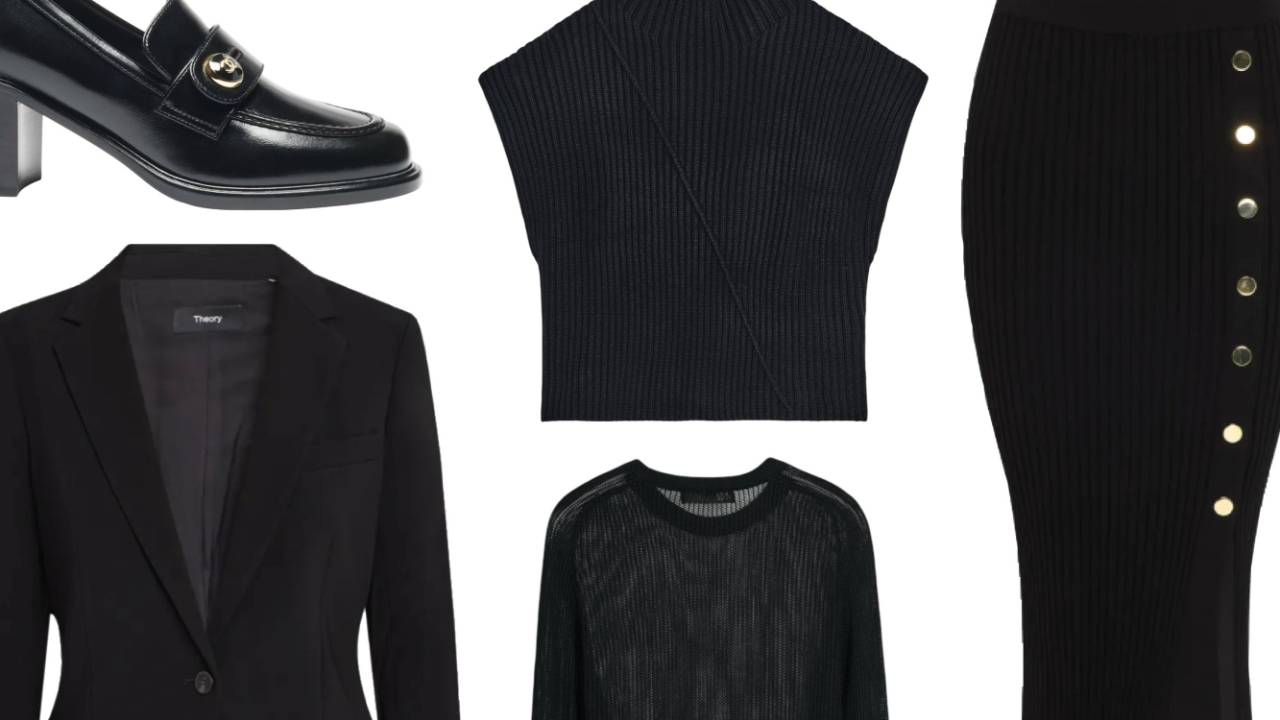
When I walk into a client’s closet, I’m rarely surprised by what I see.
- Black blazers.
- Black trousers.
- Black dresses.
- Grey knits.
- Brown coats.
Occasionally navy. Occasionally beige.
Often beautifully cut. Often expensive. Often impeccably made.
And yet, overwhelmingly dark.
To be clear: black is not the enemy.
Black is elegant. Timeless. Powerful. I’ve worked in fashion and beauty for over two decades, and black will always have a place in a refined wardrobe.
But somewhere along the way, for many women, black stops being a choice and starts becoming protection.
And that distinction matters.
When Black Stops Being Style and Starts Being Armor
After 40, life has usually asked more of you.
Your body may have changed.
Your roles have shifted.
You’ve carried responsibility, pressure, grief, loss, or simply the weight of years lived fully.
Psychologists describe this phase as one of identity consolidation, when the brain prioritizes stability, safety, and predictability over exploration. That shift shows up everywhere, including in what you wear.
Black becomes a way to:
- Minimize
- Contain
- Avoid scrutiny
- Feel “appropriate”
- Reduce decision fatigue
Many women tell me they wear black because it’s “slimming” or “easy.” But when we dig deeper, the truth often sounds more like:
“I don’t want to draw attention.”
“I don’t know what suits me anymore.”
“I don’t want to look like I’m trying too hard.”
Black becomes a uniform and uniforms are emotionally efficient.
In editorial fashion, black is styled to command.
In real life, it’s often used to disappear.
The Psychology Behind Why Black Feels So Safe
Research in color psychology consistently shows that black is associated with authority, seriousness, and control but also with emotional distance.
Studies in social perception indicate that darker clothing can act as a psychological boundary, signaling “do not engage.” This can be useful in certain contexts. But when worn exclusively, it can subtly reinforce emotional withdrawl, both internally and externally.
After periods of grief, burnout, illness, or major transition, the nervous system seeks containment. Black provides that.
It asks very little of you.
Color, on the other hand, asks you to participate.
Why Color Feels So Exposing After 40
Color communicates energy, mood, and presence instantly. Research shows people form judgments about warmth, competence, and openness within seconds, and color plays a significant role in that assessment.
When you’re not fully at home in your body or identity yet, that visibility can feel incredibly vulnerable.
I’ve worked with executives, creatives, mothers, women rebuilding after divorce or loss and hesitation around color is almost universal in midlife.
Color feels risky because it:
- Draws the eye
- Signals emotion
- Suggests aliveness
- Implies confidence
And confidence can feel unsafe when you’re still rebuilding.
But here’s the truth most women miss:
the right color doesn’t shout it supports.
How Editorial Style Uses Color Differently (And Why It Works)
If you look at how women over 40 are styled in Vogue, Harper’s Bazaar, or Elle, something important stands out:
- Color is intentional, not trend-driven
- Shades are rich, nuanced, and grown-up
- Color is used as framing, not costume
Editorial color is rarely loud. It’s layered. Anchored. Controlled.
Color isn’t there to entertain it’s there to express authority with warmth.
That’s the difference between wearing color as decoration and wearing it as identity reinforcement.
What Research Shows About Color and Confidence
Studies in behavioral psychology show that wearing color can:
- Increase perceived approachability and warmth
- Improve mood regulation
- Enhance memory and engagement
- Increase self-reported confidence
Importantly, these effects are strongest when color feels congruent with the wearer’s identity.
This is why forcing bright colors rarely works but intentional color almost always does.
How to Start Wearing Color Without Feeling Overexposed
This is not about suddenly dressing “bold.” It’s about easing back into expression.
- Start Near the Face
Color closest to the face has the biggest psychological impact with the least exposure.
A knit, blouse, scarf, or jacket in a flattering shade can:
- Lift your complexion
- Improve posture
- Shift energy immediately
This works because the brain associates facial framing with identity not vulnerability.
- Anchor Color With Neutrals
Color feels safest when grounded.
Navy, camel, grey, chocolate, cream, these provide structure and calm. Think of them as scaffolding.
When color is anchored, it reads intentional rather than performative.
- Choose Depth Over Brightness
If brights feel like too much, start with:
- Muted jewel tones
- Olive, rust, oxblood
- Dusty blues, soft greens
- Warm taupes with undertone
Depth reads sophisticated. Brightness reads youthful. You get to choose which energy feels aligned.
- Let Color Support How You Want to Feel
Research on emotional regulation shows that clothing can support desired emotional states.
Ask yourself:
- Do I want to feel calm?
- Grounded?
- Creative?
- Alive?
Color becomes a tool, not a spotlight.
What Happens When Women Reintroduce Color
When women begin to reintroduce color intentionally, something subtle but powerful happens.
- Posture improves
- Energy opens
- Facial expression softens
- They take up space again
Not loudly.
Not performatively.
But confidently.
Black will always belong in your wardrobe.
It just shouldn’t be the place you disappear.
If this resonated, you’re not alone. So many women default to black not because they lack style—but because they’re craving safety and confidence.
If you’d like help stepping back into color in a way that still feels like you, I’ve created a free 20-minute masterclass that shows you how to build a wardrobe that feels effortless, flattering, and confidence-boosting—without feeling exposed or overwhelmed.
👉 Watch the free masterclass here
And if you want to talk through your personal style struggles—what feels stuck, what’s changed, and where you want to go next—you can book a complimentary call with me. We’ll talk honestly about what’s going on and whether working together makes sense.
Author